
Skip to content
HomeInsights

Insights

Ideas for building
better software.

Engineering perspectives on architecture, product development, AI, and the everyday decisions behind useful software.

From the engineering desk

Browse practical articles or follow the latest technology updates.

Subscribe via RSS →

Curated links from external sources — not 360Softy original articles.

ExternalCloud
Google Cloud Blog

Introducing the Open Knowledge Format

As foundation models continue to improve, the lack of relevant context often limits what they can do, especially as they are used to build agentic systems. While these models can help you write code, summarize documents, or analyze a dataset, they still need the right information to produce accurate and actionable results.  That’s why today, we’re introducing the Open Knowledge Format (OKF), an open specification that formalizes the LLM-wiki pattern into a portable, interoperable format. This is

AI & Machine LearningBigQueryData Analytics
Google Cloud BlogRead original
ExternalSoftware Engineering
DZone

Beyond REST: Architecting High-Density Agentic Microservices With MCP and WASI-NN

The bill for the generative AI integration rush has arrived, and it is denominated in egress costs, token bloat, and idle container memory. For the past two years, engineering teams integrated LLMs via the path of least resistance: layering models on top of existing architectures. For human-facing use cases, this works. Humans provide implicit context, tolerate minor latency, and intuitively course-correct errors.

ExternalCybersecurity
SecurityWeek

Industry Reactions to Claude Fable 5: Feedback Friday

Industry professionals comment on various aspects of Fable 5, including dual-use capabilities, safeguards, and tiered access. The post Industry Reactions to Claude Fable 5: Feedback Friday appeared first on SecurityWeek.

Artificial IntelligenceAIFable 5
SecurityWeekRead original
External
The Hacker News

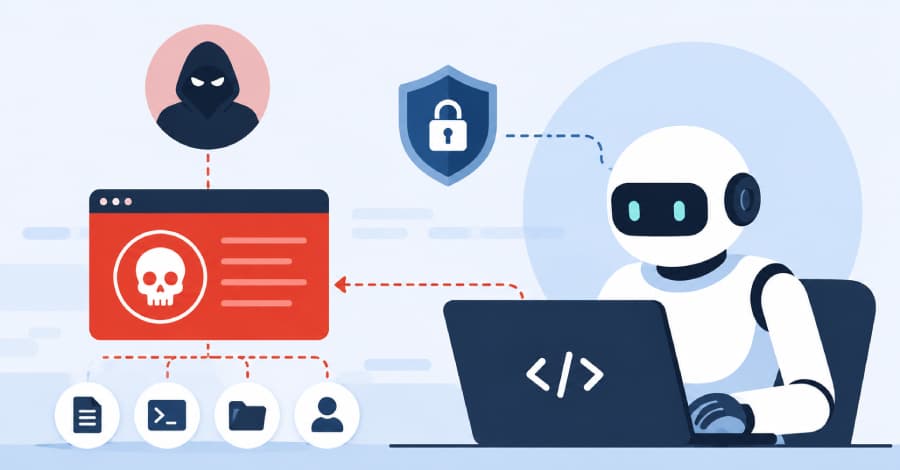
Agentjacking Attack Tricks AI Coding Agents Into Running Malicious Code

Cybersecurity researchers have described what they say is a new class of attack that can trick artificial intelligence (AI) coding agents into running arbitrary code on developer machines. Called Agentjacking by Tenet Security, the attack can be triggered by means of a fake error report crafted using Sentry, an open-source error-tracking and performance-monitoring platform. "The attack

The Hacker NewsRead original

Let’s start with a conversation

Tell us what you’re working on.

An idea, a challenge, or a system that needs to work better. We’ll help you understand the next step.