Skip to content
HomeInsights

Insights

Ideas for building
better software.

Engineering perspectives on architecture, product development, AI, and the everyday decisions behind useful software.

From the engineering desk

Browse practical articles or follow the latest technology updates.

Subscribe via RSS →

Curated links from external sources — not 360Softy original articles.

ExternalSoftware Engineering
DZone

Where Should a Transaction End? Designing Consistency Boundaries in Distributed Java Systems

Microservices do not eliminate transactions. They force architects to decide where a transaction should end. That decision is harder than it sounds. A business operation that was once handled inside a single database transaction may cross several services after decomposition. An order can involve inventory, payment, pricing, customer limits, audit history, and notification. The architecture may divide these responsibilities cleanly, but the business still sees one operation: place the order.

External
The Hacker News

WhatsApp Hid Instructions in Help Pages Telling Its AI Chatbot Not to Recommend Privacy Regulators

WhatsApp's help pages carried hidden instructions for its support chatbot that told it not to recommend a data protection authority or regulator to users who could no longer delete their accounts, even though WhatsApp's own privacy policy for Europe tells users they can complain to one. The text sat in the pages' code, never shown on screen, until it was removed by October 18. Whether the

The Hacker NewsRead original
External
The Hacker News

What Security Teams Can Do To Tame Wild Code

A sales manager builds an AI-assisted workflow to route leads. It connects to customer records, summarizes inbound requests, and posts updates to a shared channel. The workflow saves time, reduces manual work, and soon becomes part of the team’s daily routine. Across the same organization, employees are building useful apps, agents, and automations faster than existing processes can support them

The Hacker NewsRead original
External
The Hacker News

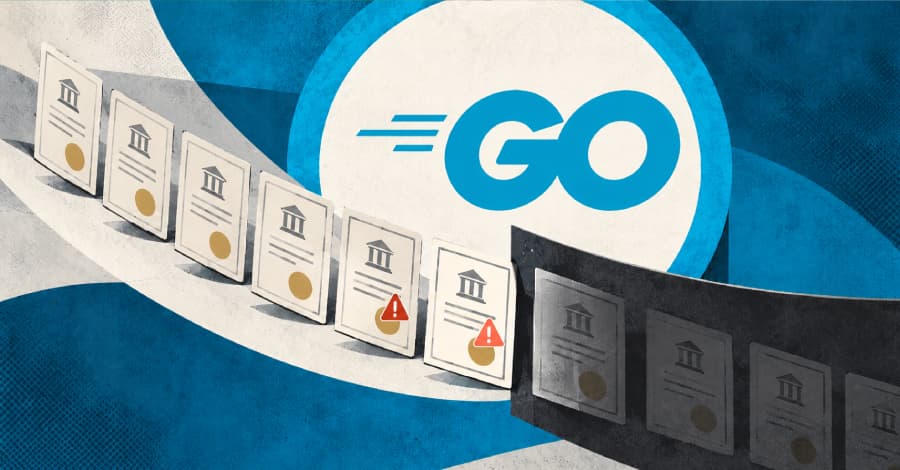
Go Issues Emergency Update Blocking Eight CA Keys Over Undisclosed Security Concerns

Go 1.27.3 and Go 1.26.10, released on October 20, make Go's certificate verifier reject any certificate chain that passes through one of eight intermediate certificate authority keys. Programs built on the new release will refuse connections to sites and services whose certificates were issued under those keys. The Go team says the keys belong to one certificate authority it has not

The Hacker NewsRead original
ExternalCybersecurity
SecurityWeek

Microsoft Targets Rogue AI Agents With Dynamic Permissions, Risk Scoring

Microsoft says companies should treat AI agents as insiders, and is adding controls that grant access per task and tighten it as an agent’s risk rises. The post Microsoft Targets Rogue AI Agents With Dynamic Permissions, Risk Scoring appeared first on SecurityWeek.

Artificial IntelligenceAIMicrosoft
SecurityWeekRead original
ExternalCloud
Google Cloud Blog

TorchTPU is now open source: Run native PyTorch on TPUs

Today at PyTorch Conference 2026, we announced a range of new products and integrations designed to help you run PyTorch effectively on Google Cloud or in your own infrastructure. Notably, TorchTPU, our native PyTorch stack for Google TPUs, is now available as open source on GitHub. With TorchTPU, TPUs join GPUs and CPUs as a native option for PyTorch. You can now train, serve, and deploy models on TPUs using the tools you already rely on, including vLLM, SGLang, llm-d, TorchTitan, Ray, TorchRec

TPUsApplication DevelopmentOpen Source
Google Cloud BlogRead original
ExternalCloud
Google Cloud Blog

Announcing llm-d 1.0: Open distributed inference for agents on Google Cloud TPUs and GPUs

Today at the PyTorch Conference, we released llm-d 1.0, an open-source, Kubernetes-native stack for distributed LLM inference. Co-founded by Google with Red Hat, IBM and others, we worked with a community of more than 500 contributors over 25 organizations on this Cloud Native Computing Foundation (CNCF) Sandbox project, bringing together two important communities: PyTorch, where vLLM and SGLang serve models, and Kubernetes, where distributed systems run and scale in production. llm-d 1.0 arrive

Containers & KubernetesGKEOpen Source
Google Cloud BlogRead original

Let’s start with a conversation

Tell us what you’re working on.

An idea, a challenge, or a system that needs to work better. We’ll help you understand the next step.